
The Ultimate Ear Piercing Chart: Understanding Types, Pain, Jewelry & Aftercare
Are you wondering what ear piercings are available, their healing times, and the best jewelry choices? A comprehensive ear piercing chart can help you navigate through the different options available. Whether you’re a first-time piercee or looking to add to your collection, this guide will provide a detailed breakdown of ear piercings, including the pain levels, healing times, jewelry styles, and aftercare tips to ensure your piercing journey is smooth and stylish.
Content
Types of Ear Piercings Explained
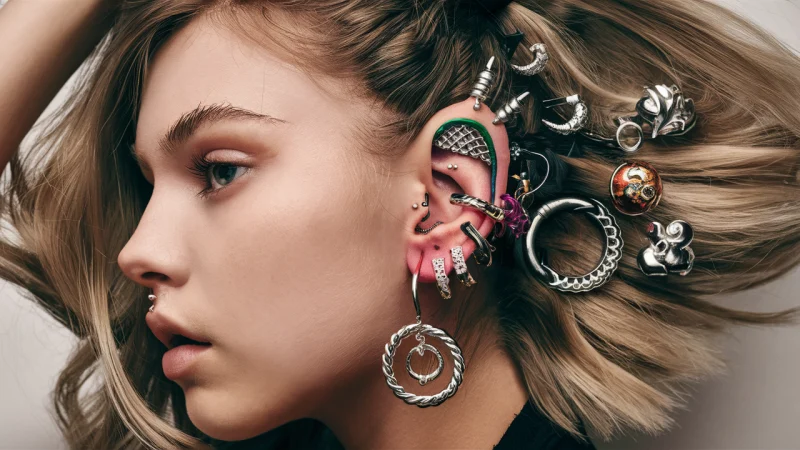
When it comes to ear piercings, there’s a wide range of styles to choose from, each offering a unique aesthetic. Below is a detailed ear piercing chart that outlines common types of ear piercings, their placement, pain levels, and healing times.
| Piercing Type | Location | Pain Level | Healing Time | Jewelry Options |
|---|---|---|---|---|
| Lobe Piercing | The soft, lower part of the ear. | Low | 4-6 weeks | Studs, small hoops |
| Helix Piercing | The upper cartilage of the ear. | Moderate | 6-9 months | Hoops, studs, barbells |
| Tragus Piercing | The small, thick cartilage in front of the ear canal. | Moderate to High | 3-6 months | Hoops, studs |
| Conch Piercing | The inner or outer cartilage near the ear canal. | High | 6-9 months | Hoops, studs, barbells |
| Industrial Piercing | Two piercings connected by a barbell across the upper ear. | High | 6-12 months | Barbell |
| Daith Piercing | The cartilage fold above the ear canal. | High | 6-9 months | Hoops, studs |
Lobe Piercing: The Classic Choice
- Placement: Located in the soft, fleshy part of the ear.
- Pain Level: Low – The pain is minimal, often described as a quick pinch.
- Healing Time: 4-6 weeks – This is one of the fastest-healing piercings.
- Jewelry Options: Studs and small hoops are common for lobe piercings, offering a classic, clean look.
Helix Piercing: The Stylish Cartilage Option
- Placement: Situated along the top edge of the ear cartilage.
- Pain Level: Moderate – A slight discomfort during the procedure, but manageable.
- Healing Time: 6-9 months – Cartilage piercings generally take longer to heal due to the lack of blood flow to the area.
- Jewelry Options: Hoops, studs, or barbells are popular for helix piercings, offering a sleek and subtle touch to your style.
Tragus Piercing: A Bold Statement
- Placement: The small, thick cartilage located just in front of the ear canal.
- Pain Level: Moderate to High – The tragus piercing can be more painful because of the dense cartilage.
- Healing Time: 3-6 months – A moderate healing time due to the sensitivity of the area.
- Jewelry Options: Hoops and studs are commonly used in tragus piercings, giving a refined yet bold look.
Conch Piercing: A Unique & Eye-catching Choice
- Placement: Either the inner or outer cartilage of the ear, just above the ear canal.
- Pain Level: High – Due to the thick cartilage, the conch piercing is known for its intensity.
- Healing Time: 6-9 months – Requires extra attention and care because of its healing duration.
- Jewelry Options: Hoops and studs are the most popular for conch piercings, although barbells can also be used for more personalized looks.
Industrial Piercing: The Bold Double Piercing
- Placement: Two piercings connected by a single barbell across the upper ear.
- Pain Level: High – This piercing can be more painful because it involves two piercings.
- Healing Time: 6-12 months – Industrial piercings have one of the longest healing times.
- Jewelry Options: A straight barbell is typically used for industrial piercings, and it offers a bold and striking appearance.
Daith Piercing: For Style & Potential Relief
- Placement: Located in the cartilage fold just above the ear canal.
- Pain Level: High – The pain level is typically higher than lobe piercings due to the cartilage involved.
- Healing Time: 6-9 months – Healing can take longer, so it requires careful aftercare.
- Jewelry Options: Hoops and studs are common choices for daith piercings, adding an elegant yet unique touch to your ear.
Choosing the Right Jewelry for Your Piercing
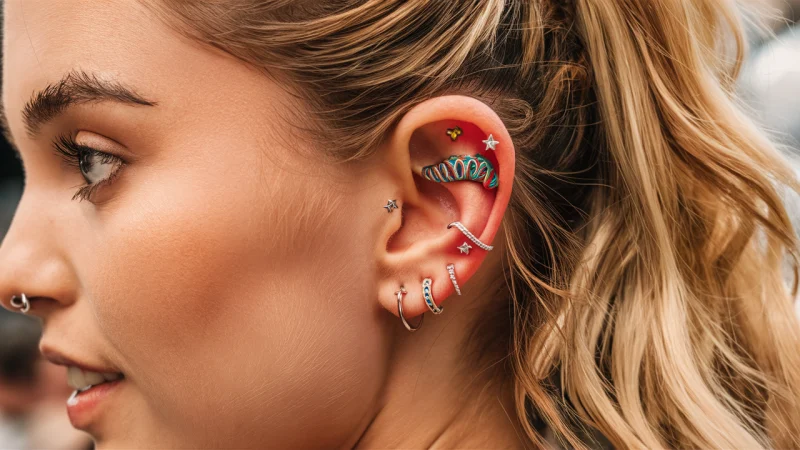
Once you’ve decided on the type of piercing, selecting the right jewelry is equally important. Here are some tips on jewelry choices:
- Materials: Titanium and gold are excellent choices for sensitive skin. Surgical steel is another popular option for durability, though it may not be ideal for those with allergies.
- Size: Make sure to choose jewelry that fits comfortably and won’t irritate the piercing during the healing process. Overly tight jewelry can cause unnecessary pressure or even lead to infections.
- Styles: From classic studs to bold hoops, the right jewelry can complement your style and enhance the healing process. Ensure that the jewelry is appropriate for your specific piercing.
Ear Piercing Aftercare: Ensuring Proper Healing
Aftercare is essential for ensuring your ear piercing heals correctly and safely. Here are some tips to follow:
- Clean the Piercing: Use saline solution or a piercing-specific cleanser. Avoid alcohol or hydrogen peroxide as they can irritate the piercing.
- Avoid Touching: Touching the piercing with dirty hands can introduce bacteria, leading to infections. Only handle the piercing with clean hands.
- Avoid Sleeping on the Piercing: Sleeping on the new piercing can put pressure on the area and disrupt the healing process. Try to sleep on the opposite side until it has fully healed.
- Be Patient: Healing times vary by piercing type, but most ear piercings take anywhere from 4 weeks to 12 months to heal completely. Don’t rush the healing process or change jewelry too early.
- Monitor for Infection: Watch for signs of infection, such as redness, swelling, or discharge. If you notice any of these symptoms, consult with a professional piercer or healthcare provider immediately.
Also Read: What to Wear after Nipple Piercing – Choosing the Right Clothes
Conclusion:
Understanding the various types of ear piercings, their healing times, pain levels, and jewelry options is essential before getting started. With so many styles available, the ear piercing chart above should help guide you through the decision-making process. Whether you’re looking for a subtle lobe piercing or a bold industrial piercing, the right choice will enhance your unique style and personality.
FAQs
How long does it take for a helix piercing to heal?
A helix piercing typically takes 6-9 months to heal fully, due to the cartilage in the ear, which has slower blood circulation.
Can I sleep on my industrial piercing right away?
It’s best to avoid sleeping on your industrial piercing until it has fully healed (usually 6-12 months), as pressure can cause irritation or discomfort.
Discover the sartorial world through Frank White, a seasoned fashion aficionado. With a keen eye for 90s fashion trends, accessories, and cultural styles, Frank explores iconic pieces, red carpet looks, and sustainable fashion, offering insights into dressing for every occasion and body type.